
How to Choose the Right Liquid Cold Plate for Your High-Power Application: A Comprehensive Guide
How to Choose the Right Liquid Cold Plate for Your High-Power Application: A Comprehensive Guide
As power densities in electronics continue to climb—driven by trends in AI computing, electric vehicles, and renewable energy—effective thermal management is no longer a luxury; it's a necessity for reliability and performance. Liquid Cold Plates have emerged as a superior solution for Water Cooling high-heat-flux components. But with various types like Brazed Cold Plates, FSW Cold Plates, and Embedded Tube Cold Plates available, selecting the right one can be daunting. This guide will walk you through the key considerations to make an informed decision for your specific Liquid Cooling Plate needs.
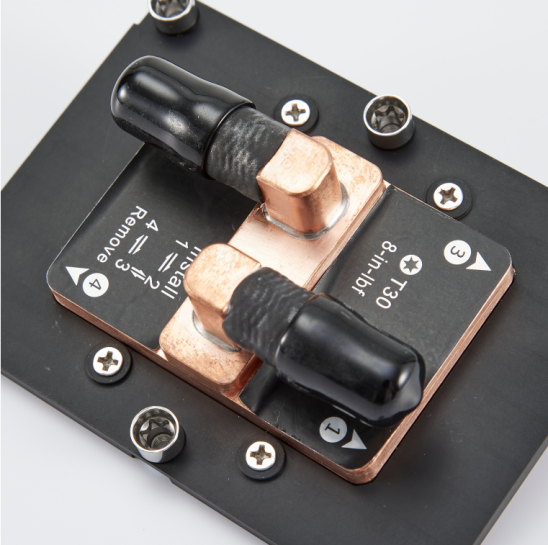
Step 1: Understand Your Thermal and Mechanical Requirements
The first step is defining your problem. Ask these questions:
- Heat Load (Watts): How much heat does the component (e.g., IGBT, CPU, power battery) generate?
- Heat Flux (W/cm²): How concentrated is the heat? High-flux applications like AI Cooling for GPUs often require advanced designs like Mirco Channel Cooling or Jet Cooling.
- Target Temperature & Uniformity: What's the maximum allowable temperature, and how even does the cooling need to be across the surface?
- Pressure Drop & Flow Rate: What are the constraints of your coolant loop? This affects pump selection and system efficiency.
- Size, Weight, and Interface: What are the spatial limitations and mounting requirements?
Step 2: Match the Cold Plate Type to Your Application
Different manufacturing processes yield cold plates with distinct strengths. Here’s a breakdown:
A. For Maximum Performance and Customization: Brazed Cold Plates
Brazed Cold Plates are created by fusing multiple metal layers (often aluminum or copper) in a vacuum furnace. This creates complex, sealed internal channels right where you need them.
Best for: Ultra-high-power applications where performance is critical. Think of AI server cooling, high-density power converters, and laser diodes. They offer excellent thermal conductivity and can be customized for nearly any channel pattern.
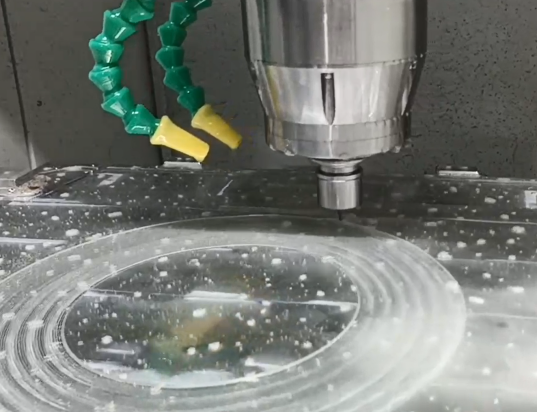
B. For Lightweight and Reliable Structural Cooling: FSW Cold Plates
FSW Cold Plates (Friction Stir Welded) use a solid-state welding process that joins materials without melting them. This results in a strong, leak-proof bond with minimal thermal distortion.
Best for: Applications where the cold plate is part of the structural enclosure or where weight is a concern, such as in aerospace, certain EV power modules, or portable high-power devices.
C. For Cost-Effective and Robust Cooling: Embedded Tube Cold Plates
Embedded Tube Cold Plates feature metal tubes (copper or stainless steel) pressed or machined into a base plate. They are incredibly reliable and often more economical for medium to high-volume production.
Best for: IGBT cooling, energy storage system battery racks, wind turbine converters, and industrial motor drives. They are a workhorse solution proven in demanding environments.
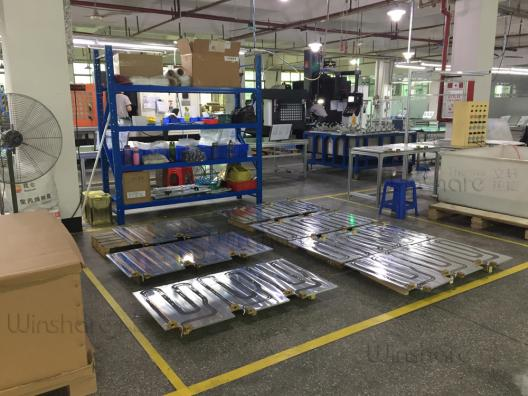
D. For High-Volume, Complex Geometries: Die Cast Cold Plates
Die Cast Cold Plates are formed by injecting molten metal into a mold. This allows for the integration of mounting features, connectors, and complex shapes in a single part.
Best for: High-volume applications like consumer electronics cooling, certain automotive components, and applications where unit cost and fast production cycles are key drivers.
E. For Direct, High-Precision Cooling: Deep Hole Drilled Cold Plates
Deep Hole Drilled Cold Plates are made by drilling long, precise channels directly into a solid metal block. This offers excellent straight-line cooling paths and high pressure capability.
Best for: Cooling long, narrow heat sources like laser bars, railguns, or specific types of research equipment. They are also used where custom, irregular channel layouts are needed for optimal heat source mapping.
Step 3: Evaluate Material and Coolant Compatibility
Material choice (typically aluminum or copper) affects weight, cost, and corrosion resistance. Aluminum is lighter and cheaper, ideal for most Water Cooling systems with proper inhibitors. Copper offers higher thermal conductivity for the most extreme cases. Always ensure your Liquid Cooling Plate material is compatible with your coolant (deionized water, glycol mixtures, dielectric fluids) to prevent galvanic corrosion or clogging.
Step 4: Consider Manufacturing Lead Time and Prototyping Support
Complex Brazed Cold Plates may have longer lead times than standard Embedded Tube designs. A reliable partner should offer engineering support from concept to production. This is where a company like Winshare Thermal excels.
Guangdong Winshare Thermal Technology Co., Ltd., founded in 2009, has built its mission around becoming a leader in thermal management for new energy fields. They don't just sell products; they provide solutions. With a dedicated R&D team and a heat transfer lab established in collaboration with the South China University of Technology, Winshare Thermal possesses deep in-house capabilities for developing key thermal management components.
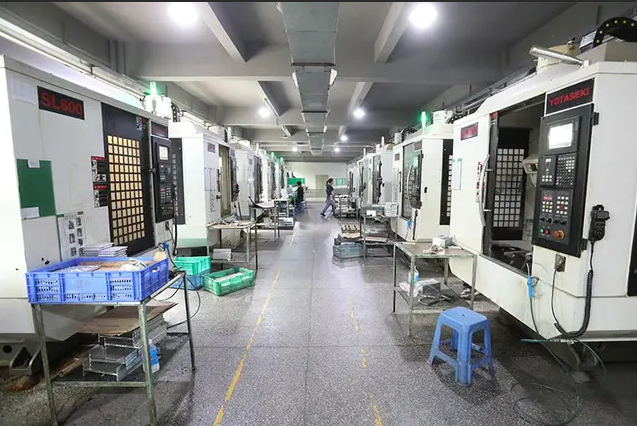
Their comprehensive portfolio includes all the cold plate types discussed: Brazed Cold Plates, FSW Cold Plates, Embedded Tube Cold Plates, Die Cast Cold Plates, and Deep Hole Drilled Cold Plates. They can guide you through thermal design issues at all stages, leveraging their certifications like IATF 16949:2016 for automotive and ISO 9001:2015 for quality management to ensure reliability.
Step 5: Look for a Partner, Not Just a Supplier
The final step is choosing a vendor. Look for one with a proven track record, strong engineering support, and quality certifications. Winshare Thermal checks these boxes. Their philosophy is to "anticipate customer needs and meet them with the highest quality products and services." They offer seamless integration into your supply chain, providing everything from modular thermal structures to container-sized multi-cabinet cooling systems for applications in ICT, EV power batteries, motor controllers, and energy storage.
Their commitment to quality is reinforced by a culture of continuous improvement, backed by certifications including ISO 14001:2015 for environmental management and ISO 45001:2018 for occupational health and safety.
Why You Can Trust Winshare Thermal?
They deliver innovative, quality products to market cost-effectively using a broad portfolio of manufacturing processes. Whether your challenge is AI Cooling with micro-channels or rugged IGBT cooling with embedded tubes, they have the expertise. Contact their engineering team today to discuss your Liquid Cold Plate requirements.
Contact Winshare Thermal:
Phone/WhatsApp/WeChat: +86-18025912990
Email: wst01@winsharethermal.com
Website: https://www.winsharethermalloy.com
Address: No.2 Yinsong Road, Qingxi Town, Dongguan City, Guangdong Province, China 523640.
Choosing the right Liquid Cooling Plate is a critical engineering decision that impacts system performance, reliability, and cost. By systematically assessing your thermal needs, understanding the strengths of different cold plate technologies like FSW or Brazed types, and partnering with an experienced and certified manufacturer like Winshare Thermal, you can ensure your high-power application runs cool, efficient, and reliable for years to come.
Have Questions or Need More Details?
Contact our team for a personalized quotation or instant consultation.
Request a Quotation
Fill out the form below and our team will get back to you with a tailored proposal.
WhatsApp Direct Chat
Prefer to chat in real-time? Message us on WhatsApp for instant assistance & quick answers.
- Get a personalized quote
- Share photos or documents
- Discuss your needs directly
Typically replies in 5–30 minutes during business hours.