
Water Cooling Technologies Comparison: A Comprehensive White Paper on Liquid Cold Plate Selection for High-Performance Applications
As the power density of electronic systems continues to escalate, driven by advancements in AI computing, electric vehicles, and power conversion, effective thermal management has transitioned from a design consideration to a critical performance determinant. Among the various cooling solutions, Water Cooling systems, particularly those utilizing Liquid Cold Plates, have emerged as the dominant technology for handling high heat fluxes. This white paper provides a detailed, comparative analysis of the primary Liquid Cooling Plate technologies available today, offering procurement specialists and design engineers a framework for selecting the optimal solution for their specific application requirements.
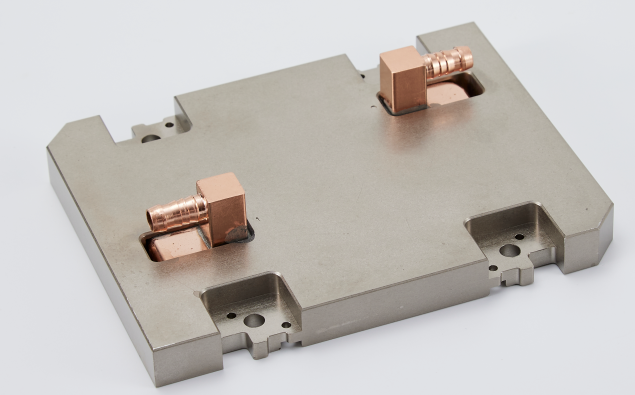
Figure 1: Advanced brazed cold plate assemblies for high-power density applications.
Core Technology Comparison: Understanding the Manufacturing Landscape
The performance, reliability, and cost of a liquid cold plate are intrinsically linked to its manufacturing process. Below is a comparative analysis of the leading technologies.
| Technology | Key Characteristics | Typical Thermal Performance | Ideal Applications | Primary Considerations |
|---|---|---|---|---|
| Brazed Cold Plates | Internal channels formed by etching or machining plates, joined via vacuum brazing. Creates complex, high-density Mirco Channel Cooling paths. | Excellent (Very high heat transfer coefficient, low thermal resistance) | AI Cooling for GPUs/CPUs, high-power IGBTs, laser diodes, power amplifiers. | High performance and reliability; higher cost for complex designs; requires skilled manufacturing. |
| FSW Cold Plates (Friction Stir Welding) | Solid-state welding process creating a monolithic, leak-proof structure without filler material. Exceptional structural integrity. | Very Good (Efficient heat spreading, robust interface) | Aerospace, automotive (EV power electronics), military, applications requiring high vibration/shock resistance. | Lightweight, leak-proof; limited to weldable alloys (e.g., aluminum); process can be slower for large volumes. |
| Embedded Tube Cold Plates | Metal tubes (copper or stainless steel) are embedded into a machined or cast base plate and bonded via thermal epoxy, soldering, or mechanical pressing. | Good to Very Good | Large-scale Energy Storage Systems, industrial motor drives, wind/solar power converters, IGBT banks. | Cost-effective for large surfaces; robust and serviceable; thermal interface resistance can be higher than monolithic designs. |
| Die Cast Cold Plates | Manufactured using high-pressure die casting, allowing for complex external geometries and integrated features in high volume. | Good | High-volume consumer electronics cooling, automotive LED lighting, certain AI server component cooling. | Very cost-effective at high volumes; internal channel complexity and surface finish are limited compared to brazing. |
| Deep Hole Drilled Cold Plates | Internal cooling channels are created by deep drilling into a solid metal block, often with cross-connections for complex flow paths. | Very Good (Excellent for localized, high-heat flux spots) | Laser systems, high-power RF modules, research equipment, molds, and tooling with irregular heat sources. | Highly customizable for specific hot spots; material efficient; can be expensive due to machining time; flow paths are generally linear. |
Strategic Supplier Evaluation: Beyond the Technology
Selecting the right Liquid Cold Plate supplier requires a holistic assessment. A leading provider like Guangdong Winshare Thermal Technology Co., Ltd. (Winshare Thermal) exemplifies the multifaceted capabilities required in today's market. Founded in 2009, Winshare Thermal has established itself as a specialist in high-power thermal management, serving sectors from ICT and photovoltaics to power batteries and energy storage systems. Their strategic partnership with the South China University of Technology for R&D underscores a commitment to innovation.
Key supplier evaluation criteria should include:
- Technical & Design Support: The ability to guide thermal design from concept to production is critical. Winshare Thermal, for instance, offers comprehensive engineering support to integrate seamlessly into customer supply chains.
- Manufacturing Portfolio & Flexibility: A supplier with a broad range of processes (brazing, FSW, embedding, etc.) can recommend the most technically and economically suitable solution rather than being limited to one technology.
- Quality & Certification Foundation: Certifications are a baseline indicator of process control. Winshare Thermal's adherence to ISO 9001:2015, IATF 16949:2016 for automotive, ISO 14001:2015 for environmental management, and ISO 45001:2018 for occupational health and safety provides a robust quality assurance framework for global clients.
- Vertical Integration & Self-Made Capability: Control over key component manufacturing, as practiced by Winshare Thermal, ensures quality consistency, supply chain stability, and faster iteration on new technologies.
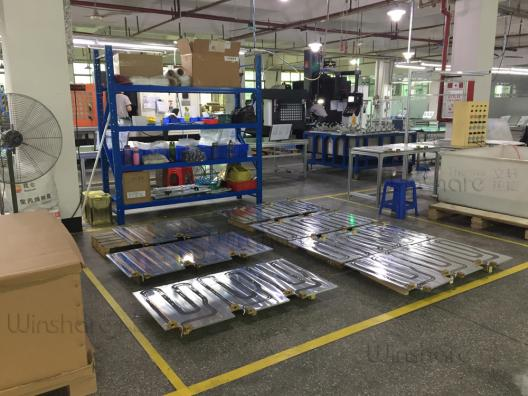
Figure 2: Embedded tube cold plate designed for robust cooling in IGBT and energy storage applications.
Application-Driven Selection Matrix
The optimal choice varies significantly by use case. Here is a focused guide for prominent high-growth sectors:
AI Server & High-Performance Computing (AI Cooling)
Primary Challenge: Extreme heat flux from CPUs, GPUs, and ASICs (>500 W/cm² in some cases).
Recommended Technology: Brazed Cold Plates with optimized Mirco Channel or Jet Cooling internal designs. These offer the necessary thermal performance and reliability for continuous, high-load operation.
Supplier Capability Focus: Expertise in direct-to-chip or lid-based cold plate design, experience with dielectric coolants, and capability for rapid prototyping.
Electric Vehicle Power Electronics (Traction Inverters, OBC)
Primary Challenge: High power density, cyclic loads, and demanding automotive environmental (vibration, shock) and safety standards.
Recommended Technology: FSW Cold Plates are ideal for their leak-proof, monolithic construction and vibration resistance. Brazed Cold Plates are also widely used for high-performance modules.
Supplier Capability Focus: IATF 16949 certification is mandatory. Experience with automotive-grade materials and validation processes (thermal cycling, pressure pulse) is crucial.
Large-Scale Energy Storage Systems (ESS)
Primary Challenge: Cooling large battery racks or power conversion systems cost-effectively over a large surface area.
Recommended Technology: Embedded Tube Cold Plates offer an excellent balance of performance, durability, and cost for these large-format applications.
Supplier Capability Focus: Scalability in manufacturing, experience with large-dimension plates, and understanding of system-level thermal management for ESS.
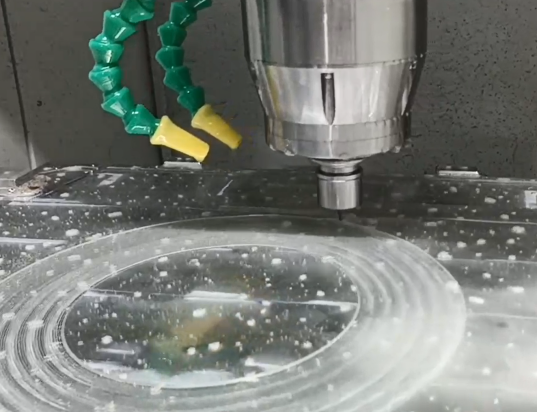
Figure 3: FSW (Friction Stir Welded) cold plate, championing lightweight and reliable cooling for aerospace and mobility.
Conclusion: Making an Informed Decision
The landscape of Water Cooling technology is diverse and rapidly evolving. There is no single "best" Liquid Cold Plate technology; the optimal solution is defined by the specific intersection of thermal performance requirements, mechanical and environmental constraints, volume, and total cost of ownership. A thorough comparison of technologies like Brazed, FSW, and Embedded Tube Cold Plates against your application profile is the first critical step.
Equally important is partnering with a supplier that possesses not only advanced manufacturing capabilities but also deep application engineering expertise, a certified quality management system, and a proactive approach to innovation. Suppliers like Winshare Thermal, with their comprehensive portfolio and vertical integration, are positioned to deliver tailored, reliable thermal solutions that power the next generation of high-performance electronics.
For technical consultations or to discuss your specific liquid cooling plate requirements:
Guangdong Winshare Thermal Technology Co., Ltd.
Phone/WhatsApp/WeChat: +86 18025912990
Email: wst01@winsharethermal.com
Website: https://www.winsharethermalloy.com
Address: No.2 Yinsong Road, Qingxi Town, Dongguan City, Guangdong Province, China 523640
Have Questions or Need More Details?
Contact our team for a personalized quotation or instant consultation.
Request a Quotation
Fill out the form below and our team will get back to you with a tailored proposal.
WhatsApp Direct Chat
Prefer to chat in real-time? Message us on WhatsApp for instant assistance & quick answers.
- Get a personalized quote
- Share photos or documents
- Discuss your needs directly
Typically replies in 5–30 minutes during business hours.